



 +91-6280082254

Published by
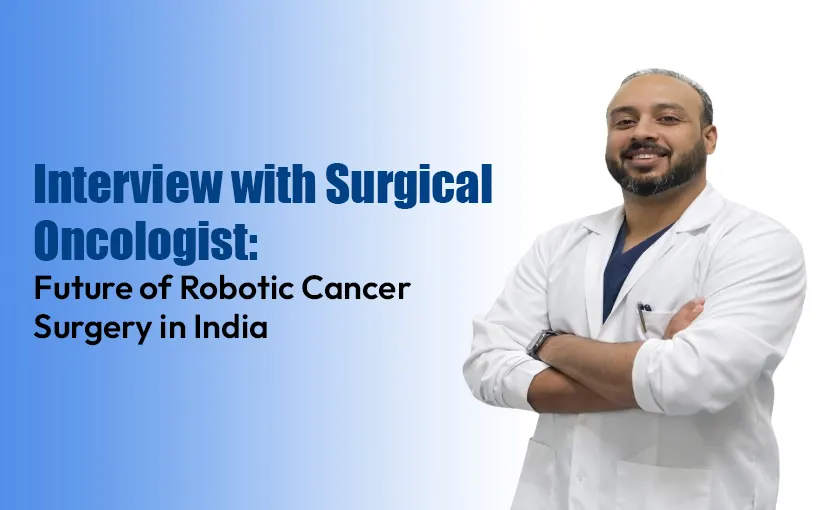
Dr. Lovedeep Singh Chauhan Consultant Surgical Oncologist, Max Super Speciality Hospital, Mohali
Reviewed by: Dr. Lovedeep Singh Chauhan, MCh (Surgical Oncology), Tata Memorial Hospital, Mumbai
Introduction
Robotic surgery is no longer a distant concept from science fiction; it is already transforming the way cancer is treated across India. From major metropolitan hospitals to regional centres like Max Super Speciality Hospital in Mohali, robotic-assisted surgical systems are giving surgeons greater precision and giving patients a faster, safer road to recovery.
We sat down with Dr. Lovedeep Singh Chauhan, a Consultant Surgical Oncologist at Max Hospital, Mohali, and a trained MCh from Tata Memorial Hospital, Mumbai, to understand where robotic cancer surgery stands today and where it is headed in the years ahead. His patients come from across Punjab from Chandigarh, Patiala, Ludhiana, and surrounding towns and his insights reflect both clinical experience and ground-level observation of how cancer care is evolving in North India.
Q1: Dr. Chauhan, how has robotic surgery changed cancer treatment over the last decade?
Dr. Lovedeep Singh Chauhan: The change has been significant. When I was training at Tata Memorial Hospital in Mumbai, robotic platforms were available but still considered highly specialized. Over the last ten years, the technology has become far more accessible, and more importantly, surgeons across India have received structured training in it.
What robotic surgery offers is a level of precision and control that is difficult to achieve with conventional open surgery or even standard laparoscopy. The robotic arms move with greater range of motion, the camera provides a magnified three-dimensional view of the surgical field, and the tremor-filtering technology reduces involuntary hand movements during delicate dissection.
For cancer surgery specifically, this means we can operate closer to critical structures nerves, blood vessels, and healthy organs without compromising oncological margins. That is especially important in procedures like rectal cancer surgery, where preserving bladder and sexual function alongside cancer clearance is a real clinical challenge.
Q2: Which cancer types benefit most from robotic surgery in your clinical practice?
Dr. Lovedeep Singh Chauhan: In my practice at Max Hospital, Mohali, I use robotic techniques across several tumour types, but the ones where robotic assistance adds the most value are colorectal cancers, gynecological malignancies, and urological malignancies.
For colorectal cancers, particularly mid and low rectal tumours, the robotic platform allows total mesorectal excision with excellent visualisation deep in the pelvis — something that is anatomically difficult with laparoscopic instruments. For gynecological malignancies such as cervical and endometrial cancer, robotic surgery allows precise lymph node dissection while preserving surrounding structures.
In urological malignancies, robotic prostatectomy and nephrectomy are increasingly being offered as a standard of care at our centre. For head and neck cancers, transoral robotic surgery (TORS) is an emerging approach that allows us to remove oropharyngeal tumours without large external incisions.
I also use minimally invasive approaches for breast cancers and endocrine malignancies like thyroid cancer, though the robotic platform is not always indicated, patient selection and tumour stage remain the deciding factors.
Q3: What is the current state of robotic cancer surgery in Punjab and North India?
Dr. Lovedeep Singh Chauhan: Punjab and the broader Chandigarh triad Chandigarh, Mohali, and Panchkula are now home to some of the most well-equipped surgical oncology centres in North India. Patients who earlier travelled to Delhi or Mumbai for advanced cancer surgery are increasingly finding world-class care closer to home.
At Max Super Speciality Hospital, Mohali, we have a dedicated robotic surgery programme. Patients from Patiala, Ludhiana, Ropar, and even parts of Himachal Pradesh and Haryana come to us for cancer surgery. The awareness about minimally invasive and robotic cancer surgery is growing, and families are now asking the right questions about recovery time, about functional outcomes, about whether a keyhole approach is possible for their loved one.
That said, there are still gaps. Robotic surgery is not available in every district hospital, and affordability remains a genuine concern for many patients. These are challenges that need policy-level attention, though institutional efforts are being made to expand access. As an oncologist in Punjab, I see both the progress and the work still ahead.
Q4: What are the limitations or risks that patients should be aware of?
Dr. Lovedeep Singh Chauhan: Robotic surgery is not appropriate for every patient or every tumour. Very large tumours, cases with extensive adhesions from previous surgeries, or situations where the cancer has grown into adjacent structures may require open surgery for safe and complete tumour removal.
There is also a learning curve. The outcomes with robotic surgery depend heavily on the surgeon's training and case volume. Patients should ask about the surgeon's experience with robotic procedures for their specific cancer type, not just general robotic surgery experience.
Cost is another honest consideration. Robotic surgery is more expensive than conventional laparoscopic or open surgery, and insurance coverage varies. I always discuss the options transparently with my patients so they can make an informed decision.
What I want patients to understand is this: the goal of cancer surgery is complete tumour clearance with acceptable morbidity remains constant. Robotic surgery is a tool that helps achieve that goal better in selected patients, not a universal replacement for all surgical approaches.
Related Read: Guide to Robotic Cancer Surgery: Benefits, Risks, and Recovery Explained — for a detailed patient-friendly breakdown of what to expect before, during, and after robotic surgery.
Q5: How do you see robotic cancer surgery evolving in India over the next five years?
Dr. Lovedeep Singh Chauhan: I am genuinely optimistic. Several things are converging at the right time. First, indigenous robotic surgical platforms are being developed in India, which will reduce the cost significantly compared to imported systems. Second, more surgical oncology training programmes are now incorporating robotic surgery into their formal curriculum, which means the next generation of surgeons will be far more proficient.
Third, the integration of artificial intelligence into robotic platforms is going to change the operative experience in meaningful ways: real-time tissue identification, automated alerts for proximity to critical structures, and eventually semi-autonomous assistance in standardised steps of surgery.
For patients in Punjab, Chandigarh, and Ludhiana, this means that the level of surgical precision currently available at the country's top cancer centres will increasingly be the standard at regional centres too. The gap between tier-1 and tier-2 cities in oncology care is narrowing, and that is genuinely good news for cancer outcomes across North India.
Q6: What advice would you give to a patient who has just been told they need cancer surgery?
Dr. Lovedeep Singh Chauhan: The first and most important step is to consult a trained surgical oncologist not a general surgeon for your cancer surgery. Cancer surgery has its own principles around margins, lymph node clearance, and oncological safety that require specific training.
Second, do not delay. Early-stage cancers treated surgically have significantly better outcomes than cancers that are allowed to progress while the patient seeks multiple opinions or delays due to fear.
Third, ask questions. Ask about the surgical approach, the expected recovery, the risks, and the long-term functional outcomes. A good surgeon will take the time to answer each of these clearly before you sign a consent form.
Finally, surgery is often just one part of a comprehensive cancer treatment plan. Chemotherapy, radiation, targeted therapy, or hormonal therapy may all play a role depending on your cancer type and stage. At our centre, all cases are reviewed in a multidisciplinary tumour board where surgical, medical, and radiation oncologists plan the treatment together.
Related Read: How to Choose the Right Cancer Treatment Based on Stage (Surgery vs Chemo vs Targeted Therapy) — a guide to understanding your complete treatment roadmap.
About Dr. Lovedeep Singh Chauhan
Dr. Lovedeep Singh Chauhan is a Consultant Surgical Oncologist at Max Super Speciality Hospital, Mohali. He completed his MCh in Surgical Oncology from Tata Memorial Hospital, Mumbai (Homi Bhabha National Institute) and has worked as an Assistant Professor of Surgical Oncology at the same institution. He holds an MS in General Surgery from S.N. Medical College, Jodhpur, and an MBBS from GMC Patiala.
His surgical practice includes robotic and laparoscopic cancer surgery, cytoreductive surgery (CRS), HIPEC, PIPAC, and open oncological procedures across colorectal cancers, gynecological malignancies, endocrine malignancies, urological malignancies, head and neck cancers, and breast cancers. He serves patients from across Punjab including Mohali, Chandigarh, Patiala, Ludhiana, and surrounding regions.
Frequently Asked Questions (FAQs)
Disclaimer
This blog is intended for general informational and educational purposes only. It does not constitute medical advice and should not be used as a substitute for professional medical consultation, diagnosis, or treatment. Cancer treatment decisions must be made in consultation with a qualified surgical oncologist based on individual patient assessment, imaging, pathology, and multidisciplinary tumour board review. Dr. Lovedeep Singh Chauhan follows evidence-based clinical guidelines including those of the Medical Council of India (MCI), National Cancer Grid (NCG), and international oncology bodies such as NCCN and ESMO.
Dr. Lovedeep Singh Chauhan
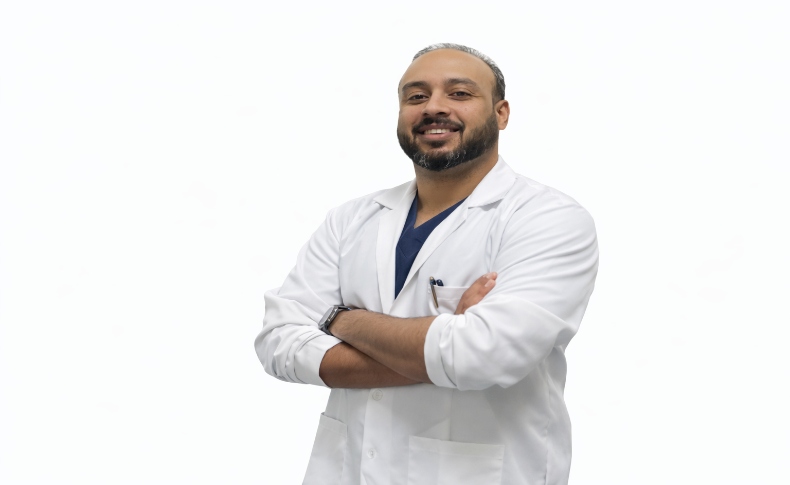
Dr. Lovedeep Singh Chauhan is a Consultant in Surgical Oncology at Max Super Speciality Hospital, Mohali (2023–present). He has received advanced training in cancer surgery from leading national institutes and has academic, clinical, and research experience across multiple subspecialties of surgical oncology.


