



 +91-6280082254

Reviewed by
Dr. Lovedeep Singh Chauhan MS, MCh (Surgical Oncology) | Senior Surgical Oncologist Trained at Tata Memorial Hospital, Mumbai Practicing at Max Super Speciality Hospital, Mohali This article is written for patient education purposes only and does not constitute personal medical advice.
Important Notice Before You Read
The following is a representative educational patient journey based on composite clinical experience. All identifying details — name, age, location, and personal circumstances — have been changed or generalised to protect patient privacy. This story does not represent any single real individual. It is shared solely to educate patients and families about what a thyroid cancer diagnosis, surgery, and recovery journey typically involves. This content complies with National Medical Commission (NMC) guidelines, which prohibit the use of real patient identities for promotional purposes in medical practice.
Introduction
When most people hear the word "cancer," they imagine it happening to someone older. But thyroid cancer — one of the most treatable cancers when caught early — frequently affects young adults, including people in their twenties and thirties who are in the middle of building careers, raising young children, or finishing their education.
This educational story follows a representative young patient — we will call her Priya — through her journey from a routine health check that changed everything, to a successful thyroid surgery, and finally to a full return to normal life. If you or someone in your family has recently been diagnosed with thyroid cancer, Priya's journey may help you understand what lies ahead and feel less alone in the process.
Patients from across Punjab — including cities like Ludhiana, Panchkula, and Mohali — frequently ask what a thyroid cancer journey actually looks like in real life. This story is our answer.
The Discovery - A Lump That Did Not Seem Serious
Priya was 27 years old when she first noticed a small swelling on the front of her neck. It was not painful. It did not interfere with swallowing. She assumed it was a lymph node reacting to a throat infection and ignored it for several weeks.
It was her mother who insisted she get it checked. At a general physician's clinic, the doctor noticed the lump moved with swallowing — a characteristic sign that it was arising from the thyroid gland, not a lymph node. An ultrasound of the neck was ordered the same week.
The ultrasound report described a solid nodule in the right lobe of the thyroid gland with irregular margins and microcalcifications — features that required further investigation. Priya was referred for a Fine Needle Aspiration Cytology (FNAC) test, a simple outpatient procedure where a thin needle is used to collect a small sample of cells from the nodule.
The Diagnosis - Papillary Thyroid Carcinoma
The FNAC report came back within a week. The finding was papillary thyroid carcinoma — the most common type of thyroid cancer, and also the one with the best prognosis when diagnosed at an early stage.
Priya's first reaction, like most young patients, was fear. The word "carcinoma" was enough to make her feel like the ground had shifted beneath her feet. She spent two nights reading everything on the internet — which, as most patients discover, made her more anxious rather than less.
Her family brought her to consult Dr. Lovedeep Singh Chauhan at Max Super Speciality Hospital, Mohali. The consultation lasted nearly an hour. Dr. Lovedeep reviewed her ultrasound, FNAC report, and thyroid function tests, and explained exactly what papillary thyroid carcinoma is, why it behaves differently from most other cancers, and what the treatment plan would involve.
"The first thing I tell young patients with papillary thyroid cancer," Dr. Lovedeep says, "is that this is a cancer we can treat very effectively. Surgery is curative in the vast majority of early-stage cases. The goal is complete removal with excellent long-term outcomes — and most patients go on to live completely normal lives."
That conversation changed everything for Priya. She left the clinic frightened but informed, and with a clear plan ahead of her.
[→ Read: What to Do After Receiving a Cancer Diagnosis — First 7 Steps Explained]
Understanding the Diagnosis - What Priya Learned
Before agreeing to surgery, Priya wanted to understand her diagnosis properly. Dr. Lovedeep explained the key details in language she could understand:
Papillary thyroid carcinoma is the most common thyroid cancer, accounting for around 80–85% of all thyroid cancer cases. It grows slowly, responds well to treatment, and has a very high cure rate when detected before it has spread beyond the thyroid gland.
TNM staging was explained — her cancer was classified as Stage I, meaning the tumour was confined to the thyroid gland and had not spread to lymph nodes or distant organs. [→ Read: Oncology Glossary — Understanding TNM Staging, Grade, and Tumor Markers]
Treatment plan — a total thyroidectomy (complete removal of the thyroid gland) was recommended, followed by radioactive iodine therapy to destroy any remaining thyroid tissue, and lifelong thyroid hormone replacement medication (levothyroxine).
Priya was reassured that after surgery and a short period of treatment, her life would return to normal — with one daily tablet replacing what her thyroid gland used to do.
Preparing for Surgery - The Two Weeks Before
Once Priya agreed to proceed with surgery, the preparation phase began. Her pre-operative workup included blood tests, a repeat ultrasound to map the nodule and surrounding lymph nodes, a laryngoscopy (to check her vocal cord function before surgery standard before thyroid operations), and cardiac clearance.
She was advised to eat well, rest adequately, and avoid the internet rabbit hole of worst-case thyroid surgery stories. A specific fasting instruction was given for the night before surgery. Her mother was designated as her primary caregiver for the admission and early recovery period.
Priya said the hardest part of preparation was not the tests — it was telling her workplace and managing the uncertainty of not knowing exactly how long she would need to recover. Her surgical team gave her a realistic timeline: admission one day before surgery, the operation itself taking 2–3 hours, hospital stay of 2–3 days, and return to desk work within 3–4 weeks.
[→ Read: Step-by-Step Guide to Preparing for Cancer Surgery]
Surgery Day - What Happened in the Operating Room
Priya was admitted the morning before her surgery. The anaesthetic team visited her in the evening to complete their assessment. She was asked to fast from midnight. By the time she was wheeled into the operating theatre the next morning, she had been reassured multiple times by the nursing staff and Dr. Lovedeep's team
The procedure performed was a total thyroidectomy with central compartment lymph node dissection — meaning the entire thyroid gland was removed along with the lymph nodes in the central neck region, to ensure no microscopic disease was left behind.
The surgery was performed under general anaesthesia through a carefully placed low-collar incision at the base of the neck — a cut that, once healed, sits naturally within a neck skin crease and becomes barely visible over time. The two most critical structures during thyroid surgery — the recurrent laryngeal nerves (which control the voice) and the parathyroid glands (which regulate calcium) — were identified and preserved carefully throughout the procedure.
Total operating time was approximately 2.5 hours. Priya woke up in the recovery room with a comfortable, manageable level of discomfort and a slightly hoarse voice — which her team had told her to expect and which was resolved within 48 hours.
Hospital Recovery - Days 1 to 3
The first day after surgery, Priya was encouraged to sit up, sip water, and take short walks around the ward with assistance. Pain was well controlled with prescribed medication. Her calcium levels were monitored carefully, as the parathyroid glands — which sit close to the thyroid — can be temporarily affected by surgery, causing low calcium symptoms like tingling in the fingers.
Calcium supplements were given as a precaution and were tapered off within two weeks as parathyroid function normalised which it does in the vast majority of cases.
Her final histopathology report, received on day two, confirmed papillary thyroid carcinoma with clear surgical margins and no lymph node involvement meaning the cancer had been completely removed. Dr. Lovedeep visited her to explain the report in detail and outline the next steps.
Priya was discharged on day three with a small dressing over her neck incision, a prescription for calcium and levothyroxine, written wound care instructions, and a follow-up appointment for ten days later.
[→ Read: Post-Cancer Surgery Recovery Checklist — Diet, Wound Care & Follow-up Schedule]
Recovery at Home - Week 1 to Week 6
<>Week 1–2: Priya rested at home, avoiding strenuous activity and keeping her neck incision dry. The wound was healing well by the first follow-up appointment. Sutures were removed, and she was given a silicone gel to apply on the scar once the wound closed fully — a step that significantly improves long-term scar appearance.
Week 3–4: Energy levels were gradually improving. She began short walks in her neighbourhood. Her voice had returned fully to normal. The only adjustment was remembering to take her levothyroxine tablet every morning on an empty stomach — a lifelong habit she was just beginning to build.
Week 5–6: Priya returned to her office job. Her colleagues noticed nothing unusual. The neck scar, still slightly pink, was easily concealed under a collar or dupatta. She described feeling "almost normal" — with the exception of slightly lower stamina than before, which her endocrinologist assured her would improve as her hormone levels were optimised.
Radioactive Iodine Therapy - The Next Step
Approximately six weeks after surgery, Priya underwent radioactive iodine (RAI) therapy as recommended by her endocrinology team. This is a targeted treatment where a small dose of radioactive iodine is swallowed in capsule form. Thyroid cells — including any microscopic cancer cells remaining after surgery — absorb the iodine and are destroyed from within.
The therapy required a short isolation period of 2–3 days at home to protect family members from radiation exposure. Priya managed this with careful planning, staying in a separate room with her own bathroom and using disposable cutlery temporarily.
After RAI therapy, a whole-body scan confirmed no residual thyroid tissue or cancer cells elsewhere in the body. Her treatment was complete.
Six Months Later - A Full Return to Life
At her six-month follow-up, Priya's thyroglobulin levels, a blood marker used to monitor for thyroid cancer recurrence, were undetectable. Her levothyroxine dose had been optimised. Her neck scar had faded significantly and was barely noticeable.
She had resumed all her normal activities: work, travel, exercise, and social life — without restriction. She described the experience as "the most frightening six months of my life, followed by complete relief." Her annual surveillance plan, a yearly thyroglobulin blood test and neck ultrasound — was set up to monitor for any recurrence, which her oncology team told her was unlikely but important to watch for.
Priya's message to other young patients who have just received a thyroid cancer diagnosis: get the right information from the right doctor, follow the plan, and trust the process. The fear at the beginning is real — but so is the recovery.
What Priya's Journey Teaches Us
Her story illustrates several important points that apply to most early thyroid cancer cases:
Early detection is genuinely life-changing. A painless neck lump that Priya almost ignored turned out to be completely curable because it was caught at Stage I. Had she waited another year or two, the staging and the treatment complexity could have been very different.
Choosing an experienced surgical oncologist matters greatly. Thyroid surgery carries specific risks to the voice and to calcium regulation that are minimised significantly in the hands of a surgeon who performs these operations regularly and with dedicated training in endocrine malignancies.
The recovery is manageable with the right preparation and support. Priya was back at work within six weeks. For a surgery to treat cancer, that is a remarkable outcome and it is increasingly the norm with experienced surgical oncology care.
Frequently Asked Questions (FAQs)
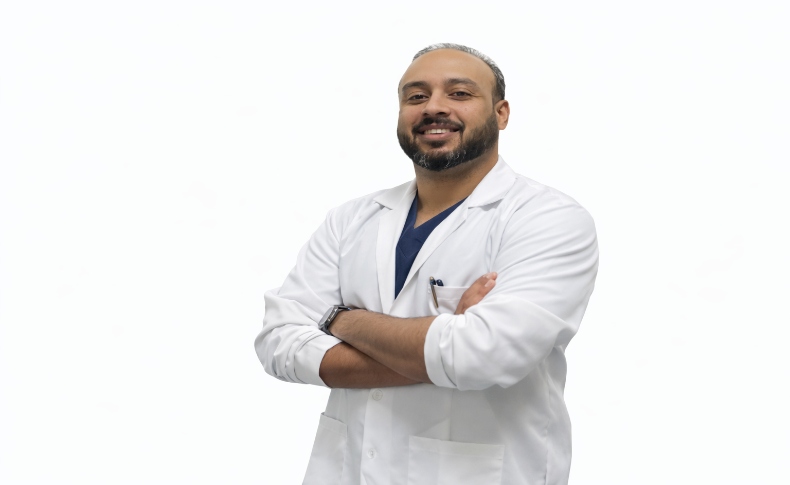
Dr. Lovedeep Singh Chauhan
Dr. Lovedeep Singh Chauhan is a Consultant in Surgical Oncology at Max Super Speciality Hospital, Mohali (2023–present). He has received advanced training in cancer surgery from leading national institutes and has academic, clinical, and research experience across multiple subspecialties of surgical oncology.


