!-- HERO SECTION -->

Head & Neck Cancer Treatment

Comprehensive Surgical Oncology Care by Dr. Lovedeep Singh Chauhan

Evidence-Based Treatment

Dr. Lovedeep Singh Chauhan – Consultant Surgical Oncologist

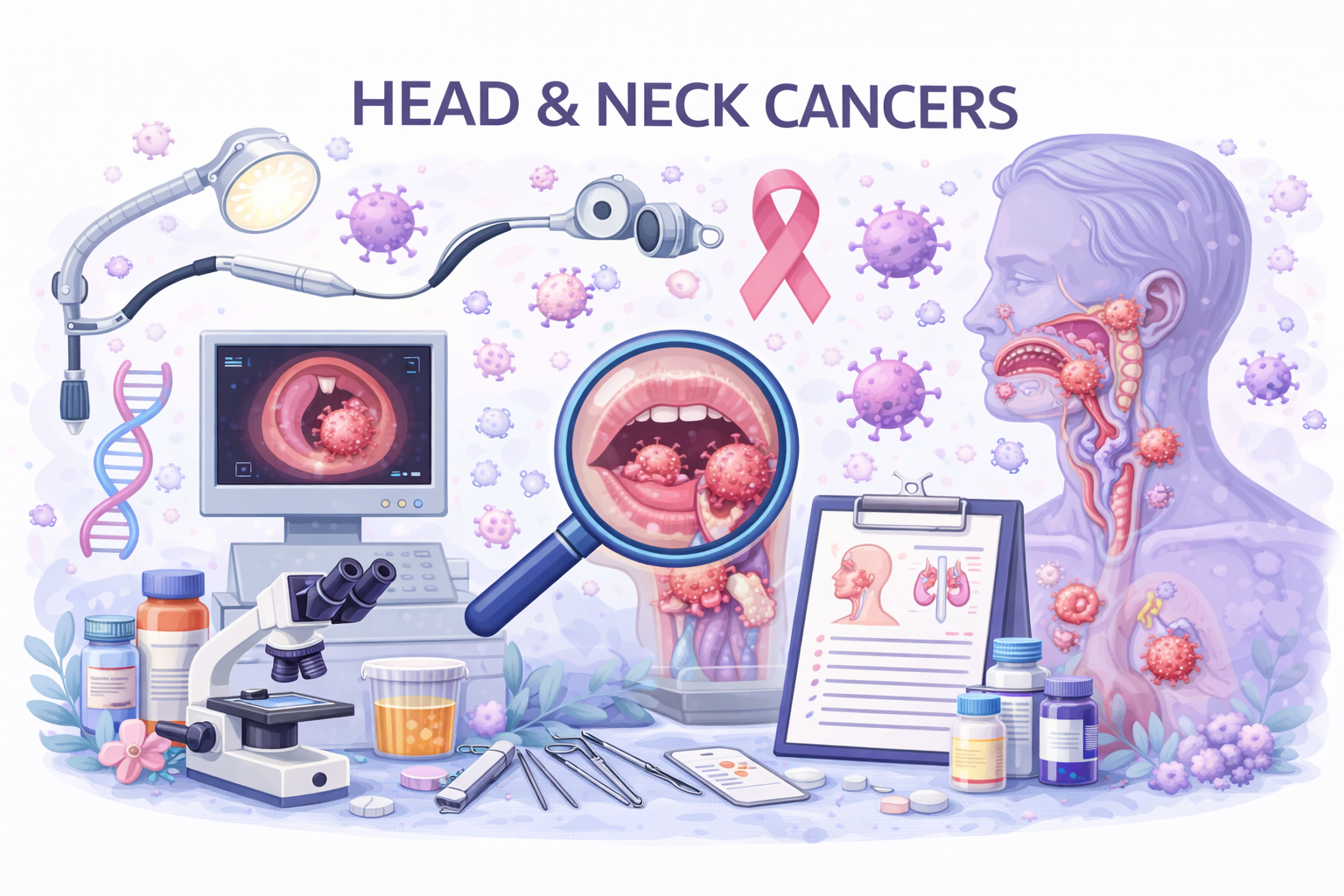
Head and neck cancers involve a complex group of malignancies affecting the mouth, throat, voice box, nasal passages, salivary glands, and thyroid gland. These regions play a critical role in breathing, speech, swallowing, appearance, and overall quality of life. Management of head and neck cancers therefore requires not only oncologic precision but also careful preservation of function and form.

Dr. Lovedeep Singh Chauhan, Consultant Surgical Oncologist at Max Super Speciality Hospital, Punjab, offers specialized, evidence-based treatment for the full spectrum of head and neck cancers. With advanced training from Tata Memorial Hospital, Mumbai, he provides individualized surgical care supported by a multidisciplinary oncology team.

Understanding Head & Neck Cancers

Head and neck cancers typically arise from the lining (squamous cells) of the upper aerodigestive tract. They may involve multiple anatomical subsites and often present with subtle early symptoms. In India, these cancers are particularly common due to high prevalence of tobacco use, smokeless tobacco, betel nut chewing, and alcohol consumption.
When detected early, many head and neck cancers are highly curable. Even in advanced stages, modern surgical techniques combined with radiation and medical oncology have significantly improved survival and quality of life outcomes.

Evidence-Based Treatment

Types of Head & Neck Cancers Treated

Mouth (Oral Cavity) Cancer

Oral cancer affects structures such as the lips, tongue, gums, inner cheek, floor of mouth, and hard palate. It often presents as a non-healing ulcer, red or white patch, pain, or difficulty chewing.

Surgery is the primary treatment for most oral cancers, often combined with neck dissection to address lymph node spread. Reconstructive surgery plays a vital role in restoring speech, swallowing, and appearance.

Oropharyngeal Cancer

Oropharyngeal cancers arise from the tonsils, base of tongue, and soft palate. Many cases today are linked to HPV infection and may affect younger patients with fewer traditional risk factors.

Treatment decisions are individualized and may include surgery, radiation, or combined approaches. Functional preservation, especially of speech and swallowing, is a key consideration.

Nasopharyngeal Cancer

Nasopharyngeal cancer originates behind the nasal cavity and above the throat. Because of its deep location, symptoms may include nasal blockage, hearing issues, or neck swelling.

Management requires careful staging and coordination between surgery, radiation oncology, and medical oncology. Advanced imaging and precise planning are essential for optimal outcomes.

Hypopharyngeal Cancer

Hypopharyngeal cancers involve the lower part of the throat and are often diagnosed at an advanced stage due to late symptom onset. Patients may experience difficulty swallowing, throat pain, or voice changes.

Treatment is complex and typically involves a combination of surgery, radiation, and chemotherapy. The goal is oncologic control while maintaining swallowing and airway function whenever possible.

Laryngeal (Voice Box) Cancer

Laryngeal cancer affects the vocal cords and surrounding structures. Hoarseness is often an early warning sign, making early diagnosis possible in many patients.

Depending on stage and location, treatment may include voice-preserving surgery, partial laryngectomy, or total laryngectomy in advanced cases. Rehabilitation and speech restoration are integral parts of care.

Nasal Cavity & Paranasal Sinus Cancer

These rare cancers arise from the nose or sinus cavities and may present with nasal obstruction, bleeding, facial pain, or swelling.

Surgical treatment requires meticulous planning due to proximity to the eyes, brain, and major blood vessels. Advanced surgical techniques allow for safe tumor removal while minimizing complications.

Salivary Gland Cancer

Salivary gland cancers can involve the parotid, submandibular, or minor salivary glands. Facial nerve preservation is a key concern, particularly in parotid gland surgery.

Treatment is primarily surgical, often followed by radiotherapy depending on tumor type and stage.

Thyroid Cancer

Thyroid cancer is generally slow-growing and highly treatable when managed appropriately. Most patients present with a thyroid nodule or neck swelling.

Surgery remains the cornerstone of treatment, with excellent long-term survival rates. Individualized surgical planning ensures complete cancer removal while preserving voice and calcium balance.

Common Symptoms of Head & Neck Cancer

Early symptoms can be subtle and are often overlooked. Timely evaluation is crucial if any of the following persist beyond two weeks

Non-healing mouth ulcer or growth

Persistent sore throat or throat pain

Difficulty or pain while swallowing

Hoarseness or voice change

Neck lump or swelling

Nasal blockage or recurrent nosebleeds

Ear pain without infection

Unexplained weight loss

Risk Factors

Tobacco use (smoking or smokeless)

Betel nut and gutkha chewing

Excessive alcohol consumption

HPV infection

Poor oral hygiene

Occupational exposures

Previous radiation exposure

Awareness and early screening in high-risk individuals can significantly improve outcomes.

Diagnostic Evaluation

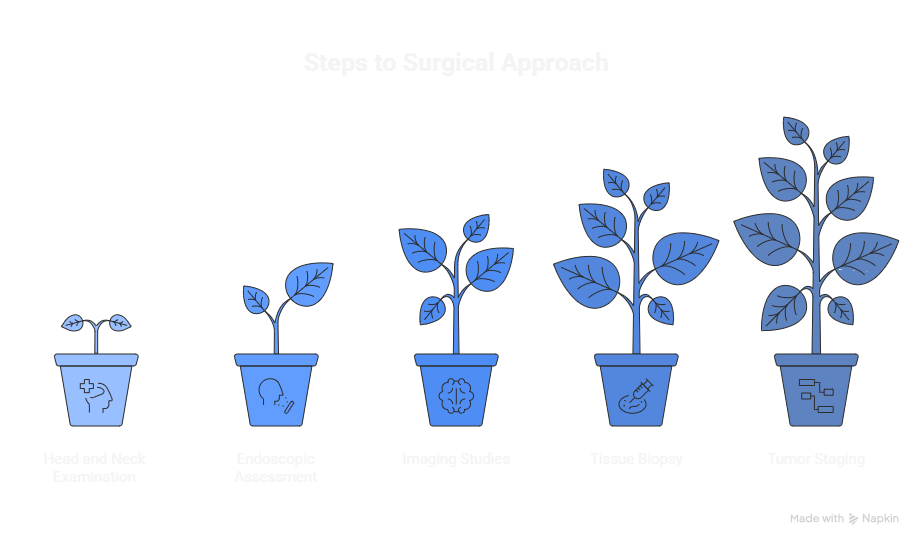
Accurate diagnosis and staging form the foundation of effective treatment. A comprehensive evaluation may include:

Evidence-Based Treatment

Surgical Approach

  • Detailed head and neck examination
  • Endoscopic assessment of the upper aerodigestive tract
  • Imaging studies such as CT, MRI, or PET-CT
  • Tissue biopsy and histopathological analysis
  • Tumor staging as per international guidelines
Each case is discussed in a multidisciplinary setting to formulate an optimal treatment plan.

Treatment Approach for Head & Neck Cancer

Treatment is tailored to the cancer type, stage, location, and patient’s overall health. Options include:

Surgical Management

Surgery remains the primary treatment modality for many head and neck cancers. The objective is complete tumor removal with adequate margins while preserving vital structures whenever possible.

Neck Dissection

Removal of lymph nodes in the neck may be required to control regional disease and improve survival.

Reconstructive Surgery

Advanced reconstructive techniques help restore form and function following cancer surgery, enabling patients to speak, swallow, and return to daily activities.

Multidisciplinary Care

Coordination with radiation oncology, medical oncology, speech and swallowing therapy, nutrition, and rehabilitation ensures comprehensive care.

Advanced Surgical Expertise by Dr. Lovedeep Singh Chauhan

Dr. Lovedeep Singh Chauhan is a Consultant Surgical Oncologist with extensive experience in managing complex head and neck cancers. He has received advanced training from Tata Memorial Hospital, Mumbai, a nationally and internationally recognized cancer center.
His approach emphasizes:

Evidence-based, ethical cancer care

Precision surgery with functional preservation

Clear communication and shared decision-making

Personalized treatment planning for each patient

Focus on Reconstruction and Quality of Life

Successful head and neck cancer treatment is not limited to tumor removal. Equal importance is given to:

Speech and voice preservation
Swallowing rehabilitation
Facial aesthetics and symmetry
Psychological and social well-being
Modern surgical and reconstructive techniques allow many patients to lead active, fulfilling lives after treatment.

Why Choose Dr. Lovedeep Singh Chauhan for Head & Neck Cancer Treatment?

  • Over 15 years of surgical experience
  • Advanced oncology training from Tata Memorial Hospital
  • Expertise in complex and advanced head & neck cancers
  • Multidisciplinary, patient-centric care model
  • Practice based at Max Super Speciality Hospital, Punjab

Evidence-Based Treatment

When Should You Consult a Specialist?

Early consultation with a head and neck cancer specialist is recommended if symptoms persist, especially in individuals with tobacco or alcohol exposure. Early-stage cancers often require less extensive treatment and have significantly better outcomes.

Have a Question? Get In Touch

whatsapp-mobi
h-call
  • Book An Appointment